
A power outage is difficult at any occupied building. At an aged-care facility that can also be isolated by floodwater, it can quickly affect medication storage, food, air mattresses, clinical equipment, communications and day-to-day care.
The site needed more than a generator sitting outside. It needed a complete standby system that could start automatically, transfer the required loads and be properly tested throughout its working life.
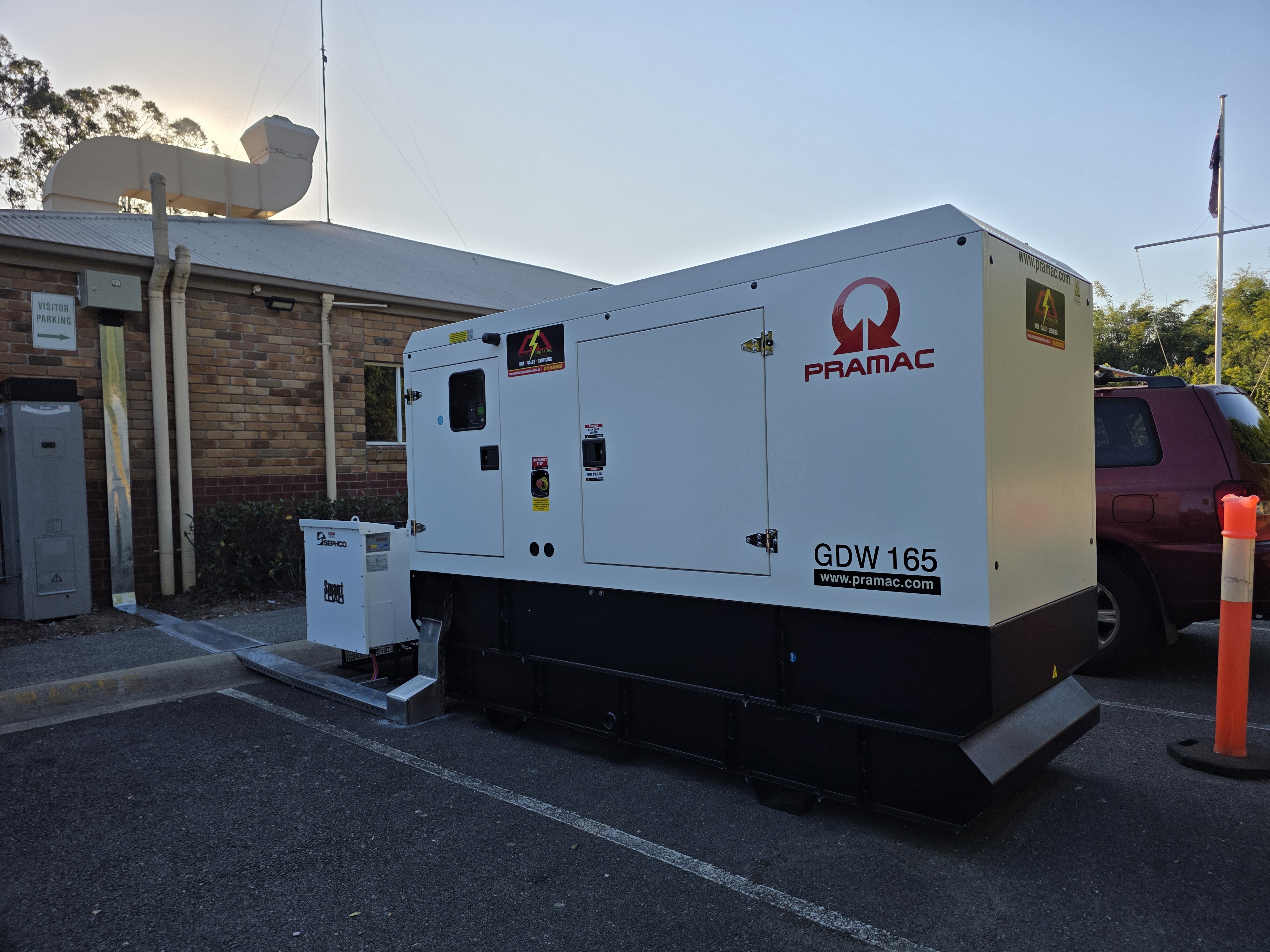
We installed a 150 kVA Pramac diesel generator powered by a Perkins engine and paired with a Mecc Alte alternator. The package was selected as a well-supported industrial set suited to critical standby duty.
Deep Sea Electronics controls monitor the mains supply and manage generator starting, stopping, alarms and transfer commands. A DSE gateway also gives CPS remote access to operating information, including fuel level — particularly useful when floodwater limits access to the site. A remote display in the main switch room means staff do not need to walk out to the generator in bad weather just to check its status.
An ABB automatic transfer switch connects the generator system to the building supply. The ATS is every bit as important as the engine: if the transfer system does not operate correctly, a healthy generator cannot carry the essential loads.
We also installed an Australian-made SEPHCO permanent load bank. It lets the facility test the generator under a known electrical load without depending on the building load being suitable on the day. Regular loaded testing checks the engine, alternator, cooling, fuel and controls, and helps prevent wet stacking and bore glazing.
The finished system combines the generator, transfer switch, controls, remote monitoring and load bank as one installation. It gives the facility a practical way to maintain and prove its emergency-power system before the next storm, not during it.