

MaxWatt MX8000i
Take stable portable power wherever it is needed with the MaxWatt MX8000i. With 8000 W maximum and 7000 W continuous output, it has useful capacity for everyday tools, appliances, electronics and mobile-work loads without stepping up to a larger stationary set. Its inverter-based output is suited to equipment that benefits from clean, controlled power, while the portable format works well for backup, camping, service vehicles and remote jobs. CPS can help confirm the load, expected runtime, charging options, accessories and delivery before you buy.
- 7000 W rated / 8000 W maximum output
- Pure sine wave digital inverter technology
- 26 L fuel tank with listed 11 h runtime
- Remote/electric start, wheels and telescopic handles
- Model
- MX8000iS
- Prime Power RPR
- TBC — refer to datasheet
- Emergency Stand-By Power ESP
- TBC — refer to datasheet
- Continuous power
- 7.0 kW
- Voltage
- 240 V
- Phase
- Single-phase
- Fuel
- Petrol
- Fuel Tank Size
- 26 L
- Run time @ 75% Load
- TBC — refer to datasheet
- Fuel consumption
- TBC — refer to datasheet
- Emission Level
- TBC — refer to datasheet
- Power
- 7.0 kW rated / 8.0 kW max
- Product type
- portable inverter generator
- Output power (rated)
- 7000 W
- Output power (max)
- 8000 W
- Runtime @75% Load
- 11 h
- Noise @ 7m
- 68 dB(A)
- Application
- home standby, small business and essential-circuit backup
Learn more — Generator School
All guides →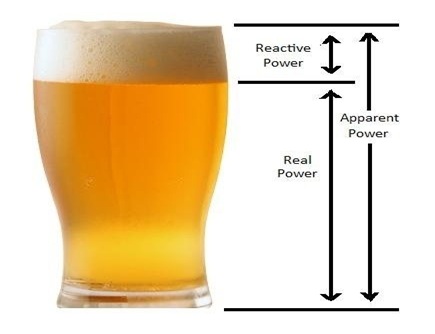
Almost every conversation about generator sizing starts with two numbers: kVA and kW. They sound similar, they're closely related, and they're almost always mis-used. The beer-glass analogy below is the fastest way to get them straight in your head — and once you do, every spec sheet in the catalogue suddenly makes sense.

A generator is really three machines bolted together: an engine, an alternator, and a controller. They each do one job, and they all have to talk to each other for the unit to behave properly.

Almost every customer who asks us 'should I get diesel or petrol?' gets the same answer: it depends on the duty. For occasional camp / weekend use under 8 kVA, petrol is cheaper to buy and lighter to move. For anything that has to start reliably after sitting unused — backup, standby, prime-power — diesel wins, almost always.