

LT TF4
The Pramac LT TF4 is built for crews that need serious illumination without constantly relocating the tower. Delivering 58,000 lm from a mast reaching 4.2 m, it can cover broad work zones, laydown areas, roadworks and event spaces with fewer dark spots.
The 4 × 100 W LED floodlights can be aimed where the job needs light. Manual / electric mast lifting make setup and aiming straightforward.
Available with expert product support from CPS for construction, hire fleets, events and remote-site lighting across Australia.
- Four 100 W LED lamps producing 58,000 lm total
- Manual mast with optional electric actuator
- Compact 122–123 kg hand-trolley package
- Up to five units can be connected in series
- No onboard diesel engine or fuel tank
Industry-leading components, fully supported in Australia

Pramac
Pramac is a leading global manufacturer of stationary and mobile power generation equipment, founded in Tuscany, Italy in 1966. Now part of the Generac group, Pramac engineers diesel, petrol and battery energy storage solutions trusted by rental houses, mining sites and emergency services in over 150 countries.
- Model
- LT TF4
- Item number
- LS360LT-0400GB
- Dry weight
- 122-123 kg
- Maximum units in series
- 5
- Power supply
- External 230 V / 50 Hz
- Minimum dimensions
- 662 × 586 × 1505 mm
- Maximum dimensions
- 1615 × 1615 × 4200 mm
- Wind resistance
- 80 km/h
- Lamps
- 4 × 100 W LED
- Lumens
- 110000 lm
- Total luminous flux
- 58,000 lm
- Illuminated area
- 850 m²
- Mast Height
- 8 m
- Maximum mast height
- 4.2 m
- Lifting system
- Manual / electric
Learn more — Generator School
All guides →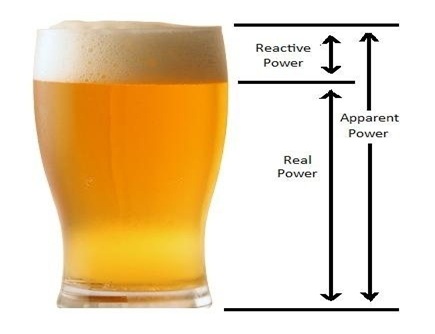
Almost every conversation about generator sizing starts with two numbers: kVA and kW. They sound similar, they're closely related, and they're almost always mis-used. The beer-glass analogy below is the fastest way to get them straight in your head — and once you do, every spec sheet in the catalogue suddenly makes sense.

A generator is really three machines bolted together: an engine, an alternator, and a controller. They each do one job, and they all have to talk to each other for the unit to behave properly.

Almost every customer who asks us 'should I get diesel or petrol?' gets the same answer: it depends on the duty. For occasional camp / weekend use under 8 kVA, petrol is cheaper to buy and lighter to move. For anything that has to start reliably after sitting unused — backup, standby, prime-power — diesel wins, almost always.