A generator can be new, well-built and supplied with all the right documentation, yet still carry a fault that only proper testing will uncover.
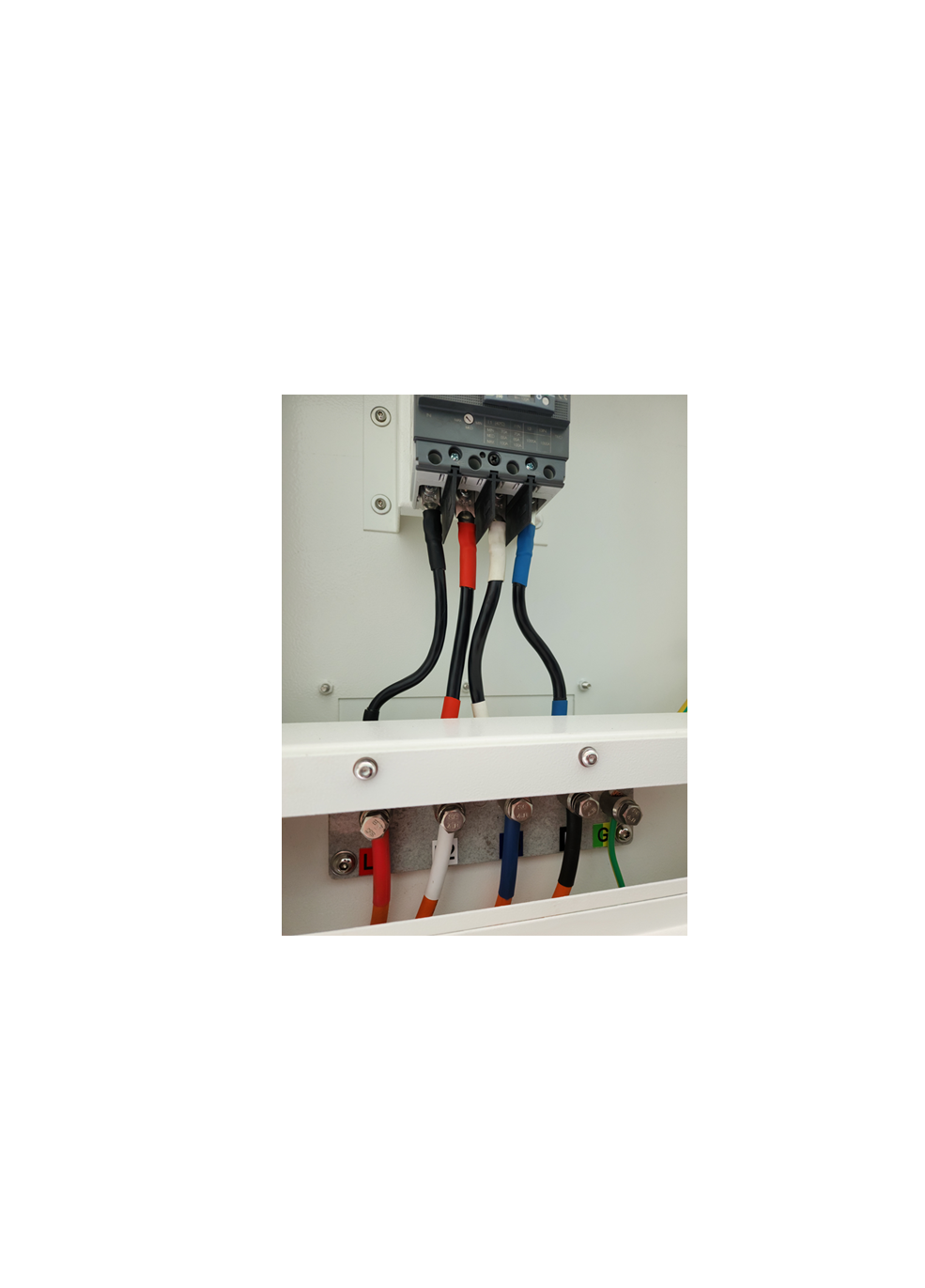
On a recent generator installation, the phase and neutral identification at the generator connection point did not match the actual output. The issue was identified during final verification after the generator had been connected and the breaker cover removed. For those playing at home, Note the bottom row of cables. They're the ones that go to the Automatic Transfer Switch, connected by the on-site electricians, following the labelling, just before testing and verification. Check out the cables to labels- Red to red (phase 1), white to white (phase 2), blue to blue (phase 3), black to black (neutral) Now note the circuit breaker- the Phase 3 (blue sheath) terminates onto the Neutral (black) through-stud!
The neutral was marked as a phase conductor, and a phase was marked as neutral.
It is exactly the sort of fault that can be missed when everyone assumes the factory markings, drawings and cable colours must be correct.
Why This Matters
In an Australian Multiple Earthed Neutral (MEN) installation, the neutral and earth system are intentionally connected at the main switchboard through the MEN link. This arrangement provides a low-impedance fault path so protective devices can operate during an earth fault. WorkSafe Queensland explains the MEN arrangement and its purpose in its polarity-testing guidance.
When an active phase is incorrectly connected to the neutral position, that phase can be brought into contact with the installation’s neutral-earth arrangement once the generator supply is made live.
The exact outcome depends on the switching arrangement and installation configuration, but the potential consequences are serious:
An immediate phase-to-earth fault through the MEN link and earthing system. Significant fault current, with the potential for arcing, equipment damage and a major unplanned outage. Incorrectly identified neutral conductors or terminals becoming energised. Damage to transfer equipment, circuit breakers, generator controls, metering or connected loads. Taps, conductive building materials bonded to the earthing system all become live in that instant.
WorkSafe Queensland has documented a comparable reverse-polarity incident where an active and neutral connection error energised a metal meter-panel enclosure in an MEN installation. The regulator’s disciplinary-action notice is a useful reminder that polarity errors are never minor.
Testing Is Not a Box-Ticking Exercise
This fault was not discovered by looking at a label. It was found through verification.
For standby generators, commissioning needs to confirm that the physical installation, conductor identification, protection, controls and switching arrangement all match the intended design. That means testing from the actual points of connection, rather than relying solely on factory labels, drawings or assumptions made earlier in the project.
A generator may start, run smoothly and display normal voltage. That does not prove the installation is correctly connected or safe to transfer.
The Lesson
Generator testing is often viewed as the final step before handover. In reality, it is one of the most important safety barriers in the entire installation.
Finding an incorrectly marked connection before the system is placed into service can prevent equipment damage, a lengthy outage and, more importantly, a serious electrical safety incident.
With any permanently connected generator, the connection and changeover arrangement must be completed and verified by licensed electricians in accordance with the applicable installation and generating-set requirements (AS/NSW3000 & AS3010 to name a couple).
Because with any source of power, the difference between “looks right” and “is right” matters enormously.